Buy cbet.eu ?
We are moving the project
cbet.eu .
Are you interested in purchasing the domain
cbet.eu ?
domain@kv-gmbh.de · 0541-91531010
Buy cbet.eu ?
What are proportion problems?
Proportion problems involve comparing two ratios or fractions to determine if they are equal. These problems often involve finding an unknown quantity in a given proportion. Proportion problems can be solved using cross multiplication or by setting up equivalent fractions. They are commonly used in various real-life situations such as cooking, finance, and geometry. **
What are proportion equations?
Proportion equations are mathematical expressions that show the equality of two ratios. They are used to compare the relationship between two sets of numbers or quantities. In a proportion equation, the cross products of the ratios are equal, meaning that the product of the first term in one ratio and the second term in the other ratio is equal to the product of the second term in the first ratio and the first term in the second ratio. Proportion equations are commonly used in various real-life situations, such as in cooking recipes, financial calculations, and solving problems involving similar figures. **


Similar search terms for Proportion
Top-Angebote
Products related to Proportion:
-
Usborne STEM Scribble Books Collection – 4 Book Set Science, Technology, Engineering & Maths Activity Books for KidsInspire curiosity and creative learning with the Usborne STEM Scribble Books Collection – 4 Book Set, from the trusted Usborne. This exciting educational collection includes: Science Scribble Book Technology Scribble Book Engineering Scribble Book Maths Scribble Book Packed with fun activities, puzzles, drawing challenges, and problem-solving exercises, these interactive scribble books introduce children to the exciting world of STEM (Science, Technology, Engineering, and Mathematics). Designed to make learning enjoyable, they encourage creativity, logical thinking, and hands-on exploration. Perfect for home learning, classroom activities, school holidays, and travel, this collection helps children build confidence while developing essential STEM skills. Why Parents & Teachers Love This Collection: Includes 4 engaging STEM activity books Encourages creativity, problem-solving, and critical thinking Covers Science, Technology, Engineering & Maths Interactive scribble activities make learning fun Ideal for children aged 6+, home learning, and classrooms A fantastic educational resource, the Usborne STEM Scribble Books Collection helps children discover, create, and learn through exciting hands-on activities.8,99 £*Shipping: 2,99 £Secure redirect to the provider
-
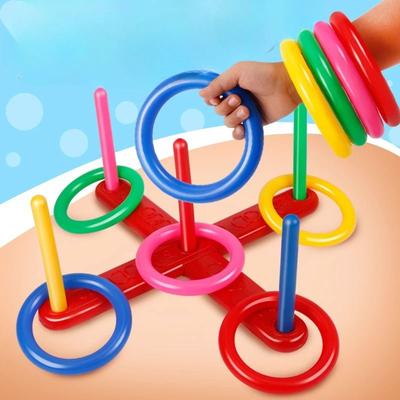
Uplifted Finds Interactive Ring Toss Training System Professional Early Education & Pediatric Fitness Infrastructure Interactive Ring Toss Training System Professional Early Education & Pediatric Fitness InfrastructureCommand ultimate developmental confidence with the Interactive Ring Toss Training System, a highperformance educational solution specifically engineered to act as a comprehensive tool for elite organization and superior technical ergonomics. Built...52,97 $*Shipping: 0,00 $Secure redirect to the provider
-
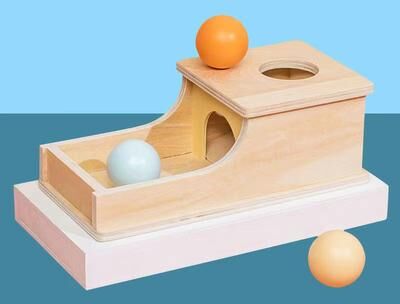
Tiny Tots Teens Trends Drawer Game Early Education Montessori Wooden Pitch Ball Box Preschool Learning Training Toy Drawer Game Early Education Montessori Wooden Pitch Ball Box Preschool Learning Training ToyThis Montessori Wooden Pitch Ball Box Drawer Game is a thoughtfully designed earlyeducation toy that transforms playtime into purposeful learning. Crafted for toddlers and preschoolers, it offers a handson, engaging way to support key developmental...39,97 $*Shipping: 0,00 $Secure redirect to the provider


-
Is my proportion correct?
To determine if your proportion is correct, you should compare it to a known or expected value. If your proportion matches the expected value or falls within an acceptable range, then it is likely correct. You can also use statistical tests to assess the significance of your proportion. Additionally, double-check your calculations and ensure that your sample size is appropriate for making accurate inferences. **
-
What is an inverse proportion function?
An inverse proportion function is a mathematical relationship between two variables where one variable increases as the other variable decreases, and vice versa. In an inverse proportion function, as one variable doubles, the other variable is halved, and so on. This relationship is typically represented by the equation y = k/x, where y is one variable, x is the other variable, and k is a constant. **
-
How do you calculate a proportion?
To calculate a proportion, you need to first determine the total number of items or individuals in the group you are interested in. Then, identify the specific subset of items or individuals that you are focusing on. Finally, divide the number of items in the subset by the total number of items in the group and multiply the result by 100 to get the proportion as a percentage. This will give you a numerical representation of the relationship between the subset and the total group. **
-
Is my three-part proportion correct?
To determine if your three-part proportion is correct, you should first ensure that the corresponding terms are correctly aligned. Then, you can cross-multiply to check if the equation holds true. If the cross-products are equal, then your three-part proportion is correct. Additionally, you can also solve for the missing term to verify if it satisfies the proportion. **
Can you solve the task using a compound proportion? I can only handle the simple proportion.
Yes, the task can be solved using a compound proportion. In a compound proportion, there are multiple ratios involved, making it suitable for situations where there are more than two quantities being compared. However, if you are more comfortable with simple proportions, you can still solve the task by breaking it down into smaller steps and using multiple simple proportions to find the solution. **
How is a compound proportion set up?
A compound proportion is set up by comparing two ratios to determine if they are equivalent. To set up a compound proportion, you would write the two ratios as fractions, with one ratio on the left side of the equation and the other ratio on the right side. Then, you cross multiply the fractions to check if the two ratios are in proportion. If the cross products are equal, then the two ratios are in proportion. **
Top-Angebote
Products related to Proportion:
-
Perfect Picks Market Geometric Building Blocks Set For Kids Early Education Intelligence Development Toy Geometric Building Blocks Set For Kids Early Education Intelligence Development ToyUnlock your child's potential with this early education equipment designed to stimulate creativity and intelligence! This geometric set is the perfect building block toy for boys, helping to develop problemsolving skills while having fun. The...35,97 $*Shipping: 0,00 $Secure redirect to the provider
-
Uplifted Finds Children's 3D Puzzle Early Education Fun DIY Paste Wood Educational Toys For Kids engineeringEncourage cognitive development and creativity with this Children's 3D Puzzle, an essential Early Education Fun DIY Paste toy designed for curious young minds. This highquality Wooden Puzzle features vibrant, 3D animal and vehicle characters,...54,97 $*Shipping: 0,00 $Secure redirect to the provider
-
Usborne STEM Scribble Books Collection – 4 Book Set Science, Technology, Engineering & Maths Activity Books for KidsInspire curiosity and creative learning with the Usborne STEM Scribble Books Collection – 4 Book Set, from the trusted Usborne. This exciting educational collection includes: Science Scribble Book Technology Scribble Book Engineering Scribble Book Maths Scribble Book Packed with fun activities, puzzles, drawing challenges, and problem-solving exercises, these interactive scribble books introduce children to the exciting world of STEM (Science, Technology, Engineering, and Mathematics). Designed to make learning enjoyable, they encourage creativity, logical thinking, and hands-on exploration. Perfect for home learning, classroom activities, school holidays, and travel, this collection helps children build confidence while developing essential STEM skills. Why Parents & Teachers Love This Collection: Includes 4 engaging STEM activity books Encourages creativity, problem-solving, and critical thinking Covers Science, Technology, Engineering & Maths Interactive scribble activities make learning fun Ideal for children aged 6+, home learning, and classrooms A fantastic educational resource, the Usborne STEM Scribble Books Collection helps children discover, create, and learn through exciting hands-on activities.8,99 £*Shipping: 2,99 £Secure redirect to the provider
-
What are proportion problems?
Proportion problems involve comparing two ratios or fractions to determine if they are equal. These problems often involve finding an unknown quantity in a given proportion. Proportion problems can be solved using cross multiplication or by setting up equivalent fractions. They are commonly used in various real-life situations such as cooking, finance, and geometry. **
-
What are proportion equations?
Proportion equations are mathematical expressions that show the equality of two ratios. They are used to compare the relationship between two sets of numbers or quantities. In a proportion equation, the cross products of the ratios are equal, meaning that the product of the first term in one ratio and the second term in the other ratio is equal to the product of the second term in the first ratio and the first term in the second ratio. Proportion equations are commonly used in various real-life situations, such as in cooking recipes, financial calculations, and solving problems involving similar figures. **
-
Is my proportion correct?
To determine if your proportion is correct, you should compare it to a known or expected value. If your proportion matches the expected value or falls within an acceptable range, then it is likely correct. You can also use statistical tests to assess the significance of your proportion. Additionally, double-check your calculations and ensure that your sample size is appropriate for making accurate inferences. **
-
What is an inverse proportion function?
An inverse proportion function is a mathematical relationship between two variables where one variable increases as the other variable decreases, and vice versa. In an inverse proportion function, as one variable doubles, the other variable is halved, and so on. This relationship is typically represented by the equation y = k/x, where y is one variable, x is the other variable, and k is a constant. **
Similar search terms for Proportion
-
Uplifted Finds Interactive Ring Toss Training System Professional Early Education & Pediatric Fitness Infrastructure Interactive Ring Toss Training System Professional Early Education & Pediatric Fitness InfrastructureCommand ultimate developmental confidence with the Interactive Ring Toss Training System, a highperformance educational solution specifically engineered to act as a comprehensive tool for elite organization and superior technical ergonomics. Built...52,97 $*Shipping: 0,00 $Secure redirect to the provider
-
Tiny Tots Teens Trends Drawer Game Early Education Montessori Wooden Pitch Ball Box Preschool Learning Training Toy Drawer Game Early Education Montessori Wooden Pitch Ball Box Preschool Learning Training ToyThis Montessori Wooden Pitch Ball Box Drawer Game is a thoughtfully designed earlyeducation toy that transforms playtime into purposeful learning. Crafted for toddlers and preschoolers, it offers a handson, engaging way to support key developmental...39,97 $*Shipping: 0,00 $Secure redirect to the provider
-
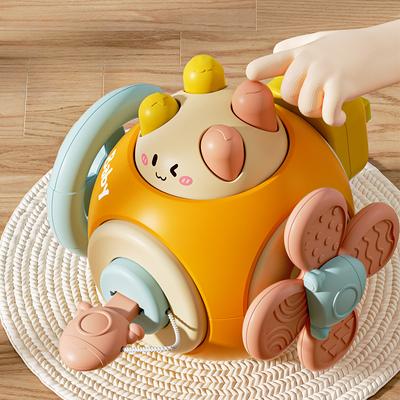
Tiny Tots Teens Trends Montessori Baby Training, Infant Puzzle Early Education Toys, Busy Hand Grasping Ball For Baby Montessori Baby Training, Infant Puzzle Early Education Toys, Busy Hand Grasping Ball For BabyIntroduce Your Baby to the World of Learning The Infant Puzzle Early Education Toys are designed to foster cognitive and physical development in your little one. This Multifunctional Busy Ball for Montessori Baby Training is ideal for enhancing...79,97 $*Shipping: 0,00 $Secure redirect to the provider
-
How do you calculate a proportion?
To calculate a proportion, you need to first determine the total number of items or individuals in the group you are interested in. Then, identify the specific subset of items or individuals that you are focusing on. Finally, divide the number of items in the subset by the total number of items in the group and multiply the result by 100 to get the proportion as a percentage. This will give you a numerical representation of the relationship between the subset and the total group. **
-
Is my three-part proportion correct?
To determine if your three-part proportion is correct, you should first ensure that the corresponding terms are correctly aligned. Then, you can cross-multiply to check if the equation holds true. If the cross-products are equal, then your three-part proportion is correct. Additionally, you can also solve for the missing term to verify if it satisfies the proportion. **
-
Can you solve the task using a compound proportion? I can only handle the simple proportion.
Yes, the task can be solved using a compound proportion. In a compound proportion, there are multiple ratios involved, making it suitable for situations where there are more than two quantities being compared. However, if you are more comfortable with simple proportions, you can still solve the task by breaking it down into smaller steps and using multiple simple proportions to find the solution. **
-
How is a compound proportion set up?
A compound proportion is set up by comparing two ratios to determine if they are equivalent. To set up a compound proportion, you would write the two ratios as fractions, with one ratio on the left side of the equation and the other ratio on the right side. Then, you cross multiply the fractions to check if the two ratios are in proportion. If the cross products are equal, then the two ratios are in proportion. **
* All prices are inclusive of VAT and, if applicable, plus shipping costs. The offer information is based on the details provided by the respective shop and is updated through automated processes. Real-time updates do not occur, so deviations can occur in individual cases. ** Note: Parts of this content were created by AI.