Buy cbet.eu ?
We are moving the project
cbet.eu .
Are you interested in purchasing the domain
cbet.eu ?
domain@kv-gmbh.de · 0541-91531010
Buy cbet.eu ?
What is the characteristic equation in control engineering?
The characteristic equation in control engineering is a polynomial equation that is derived from the transfer function of a control system. It is used to determine the stability of the system by finding the roots of the characteristic equation. The roots of the characteristic equation, also known as the poles of the system, provide valuable information about the behavior of the system, such as its stability, transient response, and frequency response. By analyzing the characteristic equation, control engineers can design and tune control systems to achieve the desired performance. **
What is the mesh equation and the node equation?
The mesh equation is a fundamental equation used in circuit analysis to calculate the current flowing in a loop of a circuit. It is based on Kirchhoff's voltage law and states that the sum of the voltage drops around a closed loop in a circuit is equal to the product of the current flowing in the loop and the total resistance of the loop. The node equation, on the other hand, is used to calculate the voltage at a specific node in a circuit. It is based on Kirchhoff's current law and states that the sum of currents entering a node is equal to the sum of currents leaving the node. This equation is used to solve for the voltage at a particular node in a circuit. **


Similar search terms for Equation
Top-Angebote
Products related to Equation:
-
Usborne STEM Scribble Books Collection – 4 Book Set Science, Technology, Engineering & Maths Activity Books for KidsInspire curiosity and creative learning with the Usborne STEM Scribble Books Collection – 4 Book Set, from the trusted Usborne. This exciting educational collection includes: Science Scribble Book Technology Scribble Book Engineering Scribble Book Maths Scribble Book Packed with fun activities, puzzles, drawing challenges, and problem-solving exercises, these interactive scribble books introduce children to the exciting world of STEM (Science, Technology, Engineering, and Mathematics). Designed to make learning enjoyable, they encourage creativity, logical thinking, and hands-on exploration. Perfect for home learning, classroom activities, school holidays, and travel, this collection helps children build confidence while developing essential STEM skills. Why Parents & Teachers Love This Collection: Includes 4 engaging STEM activity books Encourages creativity, problem-solving, and critical thinking Covers Science, Technology, Engineering & Maths Interactive scribble activities make learning fun Ideal for children aged 6+, home learning, and classrooms A fantastic educational resource, the Usborne STEM Scribble Books Collection helps children discover, create, and learn through exciting hands-on activities.8,99 £*Shipping: 2,99 £Secure redirect to the provider
-
Uplifted Finds Interactive Ring Toss Training System Professional Early Education & Pediatric Fitness Infrastructure Interactive Ring Toss Training System Professional Early Education & Pediatric Fitness InfrastructureCommand ultimate developmental confidence with the Interactive Ring Toss Training System, a highperformance educational solution specifically engineered to act as a comprehensive tool for elite organization and superior technical ergonomics. Built...52,97 $*Shipping: 0,00 $Secure redirect to the provider
-
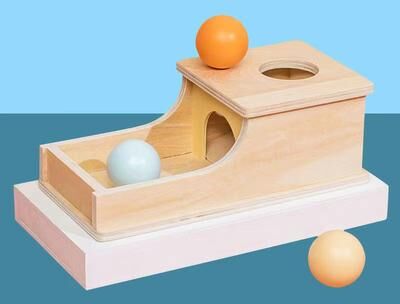
Tiny Tots Teens Trends Drawer Game Early Education Montessori Wooden Pitch Ball Box Preschool Learning Training Toy Drawer Game Early Education Montessori Wooden Pitch Ball Box Preschool Learning Training ToyThis Montessori Wooden Pitch Ball Box Drawer Game is a thoughtfully designed earlyeducation toy that transforms playtime into purposeful learning. Crafted for toddlers and preschoolers, it offers a handson, engaging way to support key developmental...39,97 $*Shipping: 0,00 $Secure redirect to the provider



-
'Equation and what?'
Equation and inequality are two fundamental concepts in mathematics. An equation is a statement that two expressions are equal, while an inequality is a statement that two expressions are not equal. Equations are used to find the value of a variable that makes the equation true, while inequalities are used to compare two quantities. Both equations and inequalities are essential tools in solving mathematical problems and modeling real-world situations. **
-
How is the linearization of a differential equation carried out in control engineering?
In control engineering, the linearization of a differential equation is carried out by approximating the nonlinear system with a linear model around a specific operating point. This involves finding the first-order Taylor series expansion of the nonlinear equations around the operating point, which results in a linear differential equation that can be more easily analyzed and controlled. The linearized model provides a simplified representation of the system's dynamics, allowing for the application of linear control techniques such as PID controllers and state-space methods. This process is essential for designing and analyzing control systems for nonlinear dynamic systems. **
-
What is the IHK certification in Sales Engineering?
The IHK certification in Sales Engineering is a professional certification offered by the German Chamber of Commerce and Industry (IHK). It is designed for individuals working in sales roles within technical industries, such as engineering or manufacturing. The certification program covers topics such as technical product knowledge, sales techniques, customer relationship management, and project management. By obtaining this certification, individuals can demonstrate their expertise in both technical and sales aspects, making them more competitive in the field of sales engineering. **
-
Is a linear equation the same as a parameter equation?
No, a linear equation and a parameter equation are not the same. A linear equation is an equation of the form y = mx + b, where m and b are constants and x and y are variables. A parameter equation, on the other hand, is an equation that contains parameters, which are variables that represent certain values in the equation. Parameter equations can be linear or non-linear, but the presence of parameters distinguishes them from regular linear equations. **


How can one reduce this equation to a quadratic equation?
To reduce an equation to a quadratic equation, one can use the method of substitution. By substituting a variable for a certain expression in the equation, one can transform the equation into a quadratic form. Another method is completing the square, which involves rearranging the equation to isolate the quadratic term and then adding or subtracting a constant to complete the square. Additionally, one can use the quadratic formula to solve for the roots of the equation, which can help in reducing the equation to a quadratic form. **
What is the second-order difference equation for an inhomogeneous equation?
The second-order difference equation for an inhomogeneous equation is of the form \(y[n] - a_1y[n-1] - a_2y[n-2] = x[n]\), where \(y[n]\) represents the output sequence, \(x[n]\) represents the input sequence, and \(a_1\) and \(a_2\) are constants. This equation describes how the current output value \(y[n]\) is related to the previous two output values \(y[n-1]\) and \(y[n-2]\), as well as the current input value \(x[n]\). The inhomogeneous term \(x[n]\) represents any external influences or disturbances acting on the system. **
Top-Angebote
Products related to Equation:
-
Perfect Picks Market Geometric Building Blocks Set For Kids Early Education Intelligence Development Toy Geometric Building Blocks Set For Kids Early Education Intelligence Development ToyUnlock your child's potential with this early education equipment designed to stimulate creativity and intelligence! This geometric set is the perfect building block toy for boys, helping to develop problemsolving skills while having fun. The...35,97 $*Shipping: 0,00 $Secure redirect to the provider
-
Uplifted Finds Children's 3D Puzzle Early Education Fun DIY Paste Wood Educational Toys For Kids engineeringEncourage cognitive development and creativity with this Children's 3D Puzzle, an essential Early Education Fun DIY Paste toy designed for curious young minds. This highquality Wooden Puzzle features vibrant, 3D animal and vehicle characters,...54,97 $*Shipping: 0,00 $Secure redirect to the provider
-
Usborne STEM Scribble Books Collection – 4 Book Set Science, Technology, Engineering & Maths Activity Books for KidsInspire curiosity and creative learning with the Usborne STEM Scribble Books Collection – 4 Book Set, from the trusted Usborne. This exciting educational collection includes: Science Scribble Book Technology Scribble Book Engineering Scribble Book Maths Scribble Book Packed with fun activities, puzzles, drawing challenges, and problem-solving exercises, these interactive scribble books introduce children to the exciting world of STEM (Science, Technology, Engineering, and Mathematics). Designed to make learning enjoyable, they encourage creativity, logical thinking, and hands-on exploration. Perfect for home learning, classroom activities, school holidays, and travel, this collection helps children build confidence while developing essential STEM skills. Why Parents & Teachers Love This Collection: Includes 4 engaging STEM activity books Encourages creativity, problem-solving, and critical thinking Covers Science, Technology, Engineering & Maths Interactive scribble activities make learning fun Ideal for children aged 6+, home learning, and classrooms A fantastic educational resource, the Usborne STEM Scribble Books Collection helps children discover, create, and learn through exciting hands-on activities.8,99 £*Shipping: 2,99 £Secure redirect to the provider
-
What is the characteristic equation in control engineering?
The characteristic equation in control engineering is a polynomial equation that is derived from the transfer function of a control system. It is used to determine the stability of the system by finding the roots of the characteristic equation. The roots of the characteristic equation, also known as the poles of the system, provide valuable information about the behavior of the system, such as its stability, transient response, and frequency response. By analyzing the characteristic equation, control engineers can design and tune control systems to achieve the desired performance. **
-
What is the mesh equation and the node equation?
The mesh equation is a fundamental equation used in circuit analysis to calculate the current flowing in a loop of a circuit. It is based on Kirchhoff's voltage law and states that the sum of the voltage drops around a closed loop in a circuit is equal to the product of the current flowing in the loop and the total resistance of the loop. The node equation, on the other hand, is used to calculate the voltage at a specific node in a circuit. It is based on Kirchhoff's current law and states that the sum of currents entering a node is equal to the sum of currents leaving the node. This equation is used to solve for the voltage at a particular node in a circuit. **
-
'Equation and what?'
Equation and inequality are two fundamental concepts in mathematics. An equation is a statement that two expressions are equal, while an inequality is a statement that two expressions are not equal. Equations are used to find the value of a variable that makes the equation true, while inequalities are used to compare two quantities. Both equations and inequalities are essential tools in solving mathematical problems and modeling real-world situations. **
-
How is the linearization of a differential equation carried out in control engineering?
In control engineering, the linearization of a differential equation is carried out by approximating the nonlinear system with a linear model around a specific operating point. This involves finding the first-order Taylor series expansion of the nonlinear equations around the operating point, which results in a linear differential equation that can be more easily analyzed and controlled. The linearized model provides a simplified representation of the system's dynamics, allowing for the application of linear control techniques such as PID controllers and state-space methods. This process is essential for designing and analyzing control systems for nonlinear dynamic systems. **
Similar search terms for Equation
-
Uplifted Finds Interactive Ring Toss Training System Professional Early Education & Pediatric Fitness Infrastructure Interactive Ring Toss Training System Professional Early Education & Pediatric Fitness InfrastructureCommand ultimate developmental confidence with the Interactive Ring Toss Training System, a highperformance educational solution specifically engineered to act as a comprehensive tool for elite organization and superior technical ergonomics. Built...52,97 $*Shipping: 0,00 $Secure redirect to the provider
-
Tiny Tots Teens Trends Drawer Game Early Education Montessori Wooden Pitch Ball Box Preschool Learning Training Toy Drawer Game Early Education Montessori Wooden Pitch Ball Box Preschool Learning Training ToyThis Montessori Wooden Pitch Ball Box Drawer Game is a thoughtfully designed earlyeducation toy that transforms playtime into purposeful learning. Crafted for toddlers and preschoolers, it offers a handson, engaging way to support key developmental...39,97 $*Shipping: 0,00 $Secure redirect to the provider
-
Tiny Tots Teens Trends Montessori Baby Training, Infant Puzzle Early Education Toys, Busy Hand Grasping Ball For Baby Montessori Baby Training, Infant Puzzle Early Education Toys, Busy Hand Grasping Ball For BabyIntroduce Your Baby to the World of Learning The Infant Puzzle Early Education Toys are designed to foster cognitive and physical development in your little one. This Multifunctional Busy Ball for Montessori Baby Training is ideal for enhancing...79,97 $*Shipping: 0,00 $Secure redirect to the provider
-
What is the IHK certification in Sales Engineering?
The IHK certification in Sales Engineering is a professional certification offered by the German Chamber of Commerce and Industry (IHK). It is designed for individuals working in sales roles within technical industries, such as engineering or manufacturing. The certification program covers topics such as technical product knowledge, sales techniques, customer relationship management, and project management. By obtaining this certification, individuals can demonstrate their expertise in both technical and sales aspects, making them more competitive in the field of sales engineering. **
-
Is a linear equation the same as a parameter equation?
No, a linear equation and a parameter equation are not the same. A linear equation is an equation of the form y = mx + b, where m and b are constants and x and y are variables. A parameter equation, on the other hand, is an equation that contains parameters, which are variables that represent certain values in the equation. Parameter equations can be linear or non-linear, but the presence of parameters distinguishes them from regular linear equations. **
-
How can one reduce this equation to a quadratic equation?
To reduce an equation to a quadratic equation, one can use the method of substitution. By substituting a variable for a certain expression in the equation, one can transform the equation into a quadratic form. Another method is completing the square, which involves rearranging the equation to isolate the quadratic term and then adding or subtracting a constant to complete the square. Additionally, one can use the quadratic formula to solve for the roots of the equation, which can help in reducing the equation to a quadratic form. **
-
What is the second-order difference equation for an inhomogeneous equation?
The second-order difference equation for an inhomogeneous equation is of the form \(y[n] - a_1y[n-1] - a_2y[n-2] = x[n]\), where \(y[n]\) represents the output sequence, \(x[n]\) represents the input sequence, and \(a_1\) and \(a_2\) are constants. This equation describes how the current output value \(y[n]\) is related to the previous two output values \(y[n-1]\) and \(y[n-2]\), as well as the current input value \(x[n]\). The inhomogeneous term \(x[n]\) represents any external influences or disturbances acting on the system. **
* All prices are inclusive of VAT and, if applicable, plus shipping costs. The offer information is based on the details provided by the respective shop and is updated through automated processes. Real-time updates do not occur, so deviations can occur in individual cases. ** Note: Parts of this content were created by AI.