Buy cbet.eu ?
We are moving the project
cbet.eu .
Are you interested in purchasing the domain
cbet.eu ?
domain@kv-gmbh.de · 0541-91531010
Buy cbet.eu ?
What does media literacy mean?
Media literacy refers to the ability to access, analyze, evaluate, and create media in a variety of forms. It involves understanding how media messages are constructed, and being able to critically assess the information and ideas presented. Media literacy also includes the skills to effectively communicate through media, and to use media in a responsible and ethical manner. Overall, media literacy empowers individuals to be informed and active participants in our media-saturated society. **
Does the truth really need media literacy?
Yes, the truth does need media literacy. Media literacy helps individuals critically analyze and evaluate the information they consume, enabling them to discern between factual information and misinformation. In today's digital age, where information is easily accessible and can be easily manipulated, media literacy is essential for ensuring that the truth is not distorted or misrepresented. By being media literate, individuals can better navigate the vast amount of information available to them and make informed decisions based on accurate and reliable sources. **

Similar search terms for Literacy
Top-Angebote
Products related to Literacy:
-
Uplifted Finds Children's 3D Puzzle Early Education Fun DIY Paste Wood Educational Toys For Kids engineeringEncourage cognitive development and creativity with this Children's 3D Puzzle, an essential Early Education Fun DIY Paste toy designed for curious young minds. This highquality Wooden Puzzle features vibrant, 3D animal and vehicle characters,...54,97 $*Shipping: 0,00 $Secure redirect to the provider
-
Usborne STEM Scribble Books Collection – 4 Book Set Science, Technology, Engineering & Maths Activity Books for KidsInspire curiosity and creative learning with the Usborne STEM Scribble Books Collection – 4 Book Set, from the trusted Usborne. This exciting educational collection includes: Science Scribble Book Technology Scribble Book Engineering Scribble Book Maths Scribble Book Packed with fun activities, puzzles, drawing challenges, and problem-solving exercises, these interactive scribble books introduce children to the exciting world of STEM (Science, Technology, Engineering, and Mathematics). Designed to make learning enjoyable, they encourage creativity, logical thinking, and hands-on exploration. Perfect for home learning, classroom activities, school holidays, and travel, this collection helps children build confidence while developing essential STEM skills. Why Parents & Teachers Love This Collection: Includes 4 engaging STEM activity books Encourages creativity, problem-solving, and critical thinking Covers Science, Technology, Engineering & Maths Interactive scribble activities make learning fun Ideal for children aged 6+, home learning, and classrooms A fantastic educational resource, the Usborne STEM Scribble Books Collection helps children discover, create, and learn through exciting hands-on activities.8,99 £*Shipping: 2,99 £Secure redirect to the provider
-
Uplifted Finds Interactive Ring Toss Training System Professional Early Education & Pediatric Fitness Infrastructure Interactive Ring Toss Training System Professional Early Education & Pediatric Fitness InfrastructureCommand ultimate developmental confidence with the Interactive Ring Toss Training System, a highperformance educational solution specifically engineered to act as a comprehensive tool for elite organization and superior technical ergonomics. Built...52,97 $*Shipping: 0,00 $Secure redirect to the provider



-
What does media literacy look like in the future in light of the development of AI?
In the future, media literacy will need to incorporate an understanding of how AI is used to create and disseminate information. This will involve being able to critically evaluate the sources and credibility of AI-generated content, as well as understanding the potential biases and ethical implications of AI algorithms. Additionally, media literacy will need to include the ability to discern between human-generated and AI-generated content, and to recognize the potential for manipulation and misinformation through AI technology. Overall, media literacy in the future will require a deeper understanding of how AI is shaping the media landscape and the ability to navigate and critically analyze AI-generated content. **
-
What are the differences between mathematical literacy and mathematics?
Mathematical literacy refers to the ability to understand and use mathematics in everyday life, such as interpreting data, making decisions based on numerical information, and solving practical problems. It focuses on the application of mathematical concepts in real-world situations. On the other hand, mathematics is the academic discipline that involves the study of numbers, quantities, shapes, and patterns, and the relationships between them. It is a more formal and abstract study of mathematical concepts, often involving rigorous proofs and theoretical frameworks. While mathematical literacy emphasizes practical application, mathematics focuses on theoretical understanding and development of mathematical principles. **
-
Should media literacy not become a mandatory subject in schools?
Media literacy should become a mandatory subject in schools because it is essential for students to develop critical thinking skills and the ability to analyze and evaluate media messages. In today's digital age, students are constantly bombarded with information from various sources, and it is crucial for them to be able to discern between credible and unreliable sources. Media literacy also helps students understand the impact of media on society and their own lives, empowering them to make informed decisions. By integrating media literacy into the curriculum, schools can better prepare students to navigate the complex media landscape and become responsible, discerning consumers of information. **
-
What are the differences between basic mathematical literacy and mathematics?
Basic mathematical literacy refers to the ability to understand and use fundamental mathematical concepts and skills, such as arithmetic, basic algebra, and geometry, to solve everyday problems. It involves being able to interpret and use numbers, measurements, and basic mathematical operations in practical situations. On the other hand, mathematics encompasses a much broader and deeper understanding of mathematical concepts, theories, and principles. It involves the study of advanced topics such as calculus, statistics, and abstract algebra, and the ability to apply mathematical reasoning and problem-solving skills to complex and theoretical problems. In essence, mathematical literacy is a foundational understanding of basic mathematical concepts, while mathematics involves a more advanced and comprehensive study of the subject. **

Does anyone know good arguments for why media literacy is so important?
Media literacy is crucial in today's digital age because it helps individuals critically analyze and evaluate the information they consume. By understanding how media messages are constructed and the potential biases they may contain, people can make more informed decisions and avoid being manipulated by false or misleading content. Media literacy also empowers individuals to be active and responsible participants in society, enabling them to engage in meaningful discussions, challenge misinformation, and contribute to a more informed and democratic society. **
When can one expect measures to promote media literacy in children and adolescents?
Measures to promote media literacy in children and adolescents can be expected to be implemented in educational settings, such as schools and after-school programs. Additionally, parents and caregivers can also play a crucial role in promoting media literacy by engaging in conversations with their children about media content and teaching them critical thinking skills. Furthermore, government and non-profit organizations may also implement initiatives to promote media literacy through public awareness campaigns and policy advocacy. Overall, promoting media literacy in children and adolescents is an ongoing effort that involves collaboration between various stakeholders. **
Top-Angebote
Products related to Literacy:
-
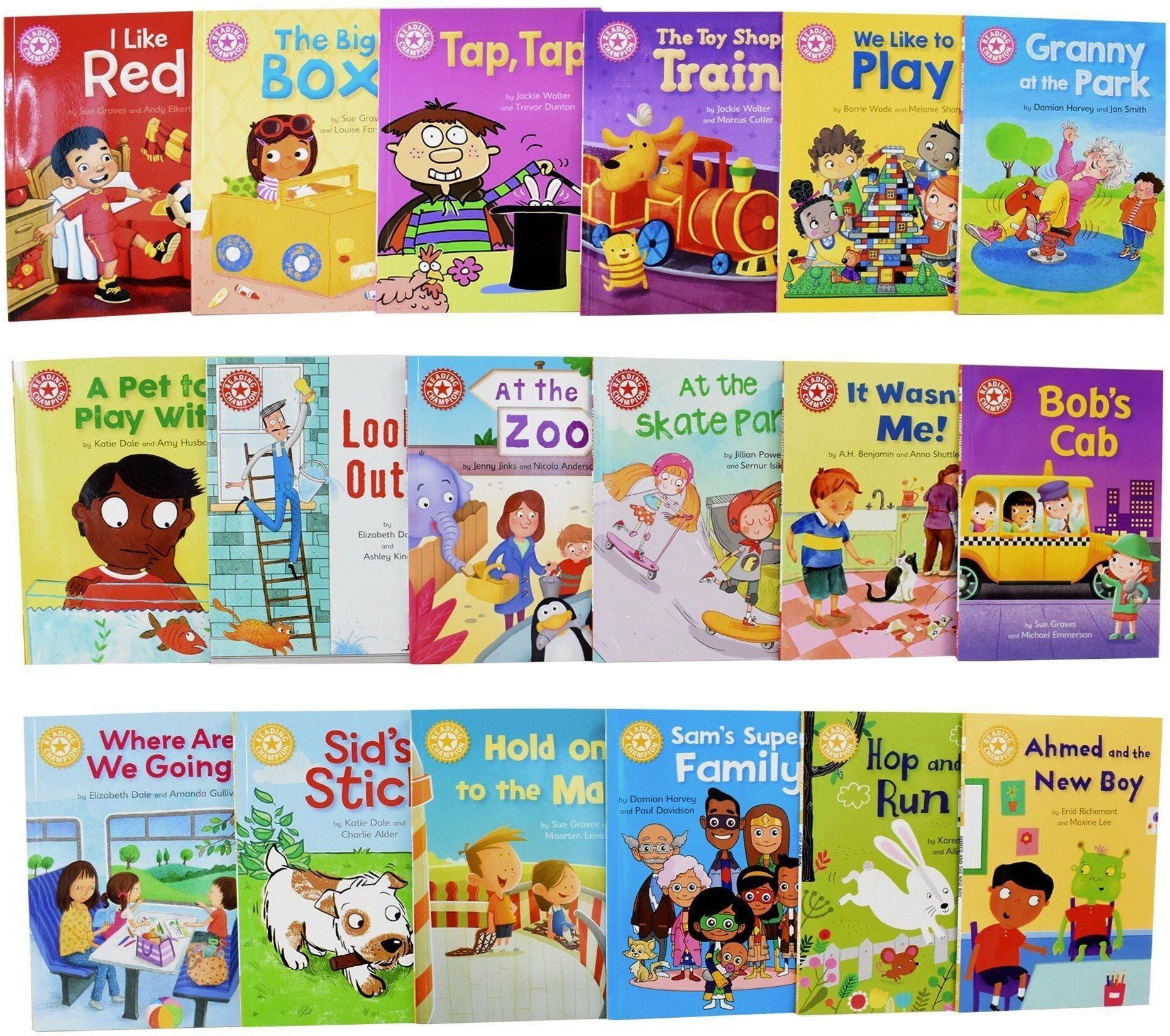
Watts Reading Champion Library for Developing Readers Collection 30 Book Set Series 1 Fun Children's Stories, Early Learning, Literacy Skills & EducationaReading Champion is an independent reading series with a fresh, modern approach. Developed in consultation with UCL Institute of Education (IOE), the books have been specifically written for independent reading and are designed to help children practise and embed their developing reading skills. support you to offer your child a wide range of books to choose from provide opportunity for your child to use and apply the reading skills they have learned in school use common interests and real-life experiences so that your child can identify with characters and settings use clear sentence structures and accessible vocabulary that your child is able to understand easily use natural language patterns so that books can be read aloud and shared with enjoyment and confidence Titles in this collection (30) Pink- I Like Red Pink-The Big Box Pink-Tap,Tap Pink-The Toy Shop Train Pink-Granny at The Park Pink-We Like To Play Red-Bob's Cab Red-It Wasn't Me Red-At The Skate Park Red-At The Zoo Red-Look Out Red- A Pet To Play With Yellow- Ahmed And the New Boy Yellow- Hop And Run Yellow-Sam's Super Family Yellow-Hold On To The Mat Yellow-Sid's Stick Yellow-Where are we going Blue-A windy day Blue-At night Blue-Flip the flamingo Blue-Merlin the mouse Blue-Stuck in the mud Blue-Fun at the beach Green-Hippo's birthday Green-The bunk bed Green-Poppy's project Green-Poor bear Green-Letters from grandpa Green-Sandeep and the dragon Use the book band that your child is reading at school to help them choose a book that is at the right level for their ability. You should decide together whether your child will read the story independently or read it aloud to you. If reading aloud then you should support your child if they hesitate or ask for help. If reading to themselves, remind your child that they can come and ask for help if they get stuck.22,89 £*Shipping: 2,99 £Secure redirect to the provider
-
Perfect Picks Market Geometric Building Blocks Set For Kids Early Education Intelligence Development Toy Geometric Building Blocks Set For Kids Early Education Intelligence Development ToyUnlock your child's potential with this early education equipment designed to stimulate creativity and intelligence! This geometric set is the perfect building block toy for boys, helping to develop problemsolving skills while having fun. The...35,97 $*Shipping: 0,00 $Secure redirect to the provider
-
Uplifted Finds Children's 3D Puzzle Early Education Fun DIY Paste Wood Educational Toys For Kids engineeringEncourage cognitive development and creativity with this Children's 3D Puzzle, an essential Early Education Fun DIY Paste toy designed for curious young minds. This highquality Wooden Puzzle features vibrant, 3D animal and vehicle characters,...54,97 $*Shipping: 0,00 $Secure redirect to the provider
-
Usborne STEM Scribble Books Collection – 4 Book Set Science, Technology, Engineering & Maths Activity Books for KidsInspire curiosity and creative learning with the Usborne STEM Scribble Books Collection – 4 Book Set, from the trusted Usborne. This exciting educational collection includes: Science Scribble Book Technology Scribble Book Engineering Scribble Book Maths Scribble Book Packed with fun activities, puzzles, drawing challenges, and problem-solving exercises, these interactive scribble books introduce children to the exciting world of STEM (Science, Technology, Engineering, and Mathematics). Designed to make learning enjoyable, they encourage creativity, logical thinking, and hands-on exploration. Perfect for home learning, classroom activities, school holidays, and travel, this collection helps children build confidence while developing essential STEM skills. Why Parents & Teachers Love This Collection: Includes 4 engaging STEM activity books Encourages creativity, problem-solving, and critical thinking Covers Science, Technology, Engineering & Maths Interactive scribble activities make learning fun Ideal for children aged 6+, home learning, and classrooms A fantastic educational resource, the Usborne STEM Scribble Books Collection helps children discover, create, and learn through exciting hands-on activities.8,99 £*Shipping: 2,99 £Secure redirect to the provider
-
What does media literacy mean?
Media literacy refers to the ability to access, analyze, evaluate, and create media in a variety of forms. It involves understanding how media messages are constructed, and being able to critically assess the information and ideas presented. Media literacy also includes the skills to effectively communicate through media, and to use media in a responsible and ethical manner. Overall, media literacy empowers individuals to be informed and active participants in our media-saturated society. **
-
Does the truth really need media literacy?
Yes, the truth does need media literacy. Media literacy helps individuals critically analyze and evaluate the information they consume, enabling them to discern between factual information and misinformation. In today's digital age, where information is easily accessible and can be easily manipulated, media literacy is essential for ensuring that the truth is not distorted or misrepresented. By being media literate, individuals can better navigate the vast amount of information available to them and make informed decisions based on accurate and reliable sources. **
-
What does media literacy look like in the future in light of the development of AI?
In the future, media literacy will need to incorporate an understanding of how AI is used to create and disseminate information. This will involve being able to critically evaluate the sources and credibility of AI-generated content, as well as understanding the potential biases and ethical implications of AI algorithms. Additionally, media literacy will need to include the ability to discern between human-generated and AI-generated content, and to recognize the potential for manipulation and misinformation through AI technology. Overall, media literacy in the future will require a deeper understanding of how AI is shaping the media landscape and the ability to navigate and critically analyze AI-generated content. **
-
What are the differences between mathematical literacy and mathematics?
Mathematical literacy refers to the ability to understand and use mathematics in everyday life, such as interpreting data, making decisions based on numerical information, and solving practical problems. It focuses on the application of mathematical concepts in real-world situations. On the other hand, mathematics is the academic discipline that involves the study of numbers, quantities, shapes, and patterns, and the relationships between them. It is a more formal and abstract study of mathematical concepts, often involving rigorous proofs and theoretical frameworks. While mathematical literacy emphasizes practical application, mathematics focuses on theoretical understanding and development of mathematical principles. **
Similar search terms for Literacy
-
Uplifted Finds Interactive Ring Toss Training System Professional Early Education & Pediatric Fitness Infrastructure Interactive Ring Toss Training System Professional Early Education & Pediatric Fitness InfrastructureCommand ultimate developmental confidence with the Interactive Ring Toss Training System, a highperformance educational solution specifically engineered to act as a comprehensive tool for elite organization and superior technical ergonomics. Built...52,97 $*Shipping: 0,00 $Secure redirect to the provider
-
Tiny Tots Teens Trends Drawer Game Early Education Montessori Wooden Pitch Ball Box Preschool Learning Training Toy Drawer Game Early Education Montessori Wooden Pitch Ball Box Preschool Learning Training ToyThis Montessori Wooden Pitch Ball Box Drawer Game is a thoughtfully designed earlyeducation toy that transforms playtime into purposeful learning. Crafted for toddlers and preschoolers, it offers a handson, engaging way to support key developmental...39,97 $*Shipping: 0,00 $Secure redirect to the provider
-
Should media literacy not become a mandatory subject in schools?
Media literacy should become a mandatory subject in schools because it is essential for students to develop critical thinking skills and the ability to analyze and evaluate media messages. In today's digital age, students are constantly bombarded with information from various sources, and it is crucial for them to be able to discern between credible and unreliable sources. Media literacy also helps students understand the impact of media on society and their own lives, empowering them to make informed decisions. By integrating media literacy into the curriculum, schools can better prepare students to navigate the complex media landscape and become responsible, discerning consumers of information. **
-
What are the differences between basic mathematical literacy and mathematics?
Basic mathematical literacy refers to the ability to understand and use fundamental mathematical concepts and skills, such as arithmetic, basic algebra, and geometry, to solve everyday problems. It involves being able to interpret and use numbers, measurements, and basic mathematical operations in practical situations. On the other hand, mathematics encompasses a much broader and deeper understanding of mathematical concepts, theories, and principles. It involves the study of advanced topics such as calculus, statistics, and abstract algebra, and the ability to apply mathematical reasoning and problem-solving skills to complex and theoretical problems. In essence, mathematical literacy is a foundational understanding of basic mathematical concepts, while mathematics involves a more advanced and comprehensive study of the subject. **
-
Does anyone know good arguments for why media literacy is so important?
Media literacy is crucial in today's digital age because it helps individuals critically analyze and evaluate the information they consume. By understanding how media messages are constructed and the potential biases they may contain, people can make more informed decisions and avoid being manipulated by false or misleading content. Media literacy also empowers individuals to be active and responsible participants in society, enabling them to engage in meaningful discussions, challenge misinformation, and contribute to a more informed and democratic society. **
-
When can one expect measures to promote media literacy in children and adolescents?
Measures to promote media literacy in children and adolescents can be expected to be implemented in educational settings, such as schools and after-school programs. Additionally, parents and caregivers can also play a crucial role in promoting media literacy by engaging in conversations with their children about media content and teaching them critical thinking skills. Furthermore, government and non-profit organizations may also implement initiatives to promote media literacy through public awareness campaigns and policy advocacy. Overall, promoting media literacy in children and adolescents is an ongoing effort that involves collaboration between various stakeholders. **
* All prices are inclusive of VAT and, if applicable, plus shipping costs. The offer information is based on the details provided by the respective shop and is updated through automated processes. Real-time updates do not occur, so deviations can occur in individual cases. ** Note: Parts of this content were created by AI.