Buy cbet.eu ?
We are moving the project
cbet.eu .
Are you interested in purchasing the domain
cbet.eu ?
domain@kv-gmbh.de · 0541-91531010
Buy cbet.eu ?
What is the implication?
The implication refers to the conclusion or suggestion that can be drawn from a particular situation or piece of information. It is the logical consequence or significance of something that has been said or done. Understanding the implication is important as it helps us grasp the deeper meaning or potential outcomes of a given scenario. It allows us to make informed decisions and anticipate the possible effects of our actions. **
Are implication and conjunction the same?
No, implication and conjunction are not the same. Implication, represented by the symbol "→", is a logical operation that represents "if-then" statements. It states that if the antecedent is true, then the consequent must also be true. On the other hand, conjunction, represented by the symbol "∧", is a logical operation that represents "and" statements. It states that both the statements connected by the conjunction must be true for the entire statement to be true. In summary, implication deals with conditional relationships, while conjunction deals with the combination of multiple true statements. **


Similar search terms for Implication
Top-Angebote
Products related to Implication:
-
Usborne STEM Scribble Books Collection – 4 Book Set Science, Technology, Engineering & Maths Activity Books for KidsInspire curiosity and creative learning with the Usborne STEM Scribble Books Collection – 4 Book Set, from the trusted Usborne. This exciting educational collection includes: Science Scribble Book Technology Scribble Book Engineering Scribble Book Maths Scribble Book Packed with fun activities, puzzles, drawing challenges, and problem-solving exercises, these interactive scribble books introduce children to the exciting world of STEM (Science, Technology, Engineering, and Mathematics). Designed to make learning enjoyable, they encourage creativity, logical thinking, and hands-on exploration. Perfect for home learning, classroom activities, school holidays, and travel, this collection helps children build confidence while developing essential STEM skills. Why Parents & Teachers Love This Collection: Includes 4 engaging STEM activity books Encourages creativity, problem-solving, and critical thinking Covers Science, Technology, Engineering & Maths Interactive scribble activities make learning fun Ideal for children aged 6+, home learning, and classrooms A fantastic educational resource, the Usborne STEM Scribble Books Collection helps children discover, create, and learn through exciting hands-on activities.8,99 £*Shipping: 2,99 £Secure redirect to the provider
-
Uplifted Finds Interactive Ring Toss Training System Professional Early Education & Pediatric Fitness Infrastructure Interactive Ring Toss Training System Professional Early Education & Pediatric Fitness InfrastructureCommand ultimate developmental confidence with the Interactive Ring Toss Training System, a highperformance educational solution specifically engineered to act as a comprehensive tool for elite organization and superior technical ergonomics. Built...52,97 $*Shipping: 0,00 $Secure redirect to the provider
-
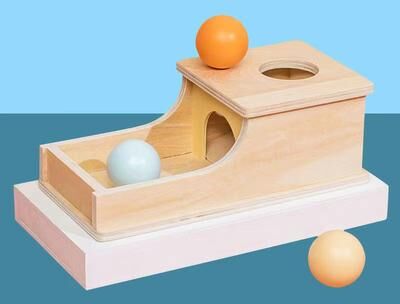
Tiny Tots Teens Trends Drawer Game Early Education Montessori Wooden Pitch Ball Box Preschool Learning Training Toy Drawer Game Early Education Montessori Wooden Pitch Ball Box Preschool Learning Training ToyThis Montessori Wooden Pitch Ball Box Drawer Game is a thoughtfully designed earlyeducation toy that transforms playtime into purposeful learning. Crafted for toddlers and preschoolers, it offers a handson, engaging way to support key developmental...39,97 $*Shipping: 0,00 $Secure redirect to the provider


-
How do I prove the following implication?
To prove an implication, you typically assume the antecedent (the statement that comes before the "if" in the implication) is true and then show that the consequent (the statement that comes after the "then" in the implication) must also be true. This can be done through direct proof, contrapositive proof, proof by contradiction, or proof by cases, depending on the specific implication and the context in which it is being proven. It is important to carefully follow the logical steps and rules of inference to ensure a valid proof. **
-
How can I best remember the implication?
To best remember the implication, you can try creating associations or connections between the information you want to remember and something familiar to you. This could be through visualization, creating mnemonic devices, or using repetition to reinforce the concept in your memory. Additionally, practicing active recall by testing yourself on the implication and explaining it in your own words can help solidify your understanding and retention of the information. Lastly, teaching the concept to someone else can also be an effective way to remember the implication as it requires you to articulate and reinforce your understanding of the topic. **
-
Does an implication apply to both sides?
Yes, an implication applies to both sides. In an implication statement "if A then B," A is the antecedent and B is the consequent. This means that if A is true, then B must also be true. However, if A is false, then the statement is still considered true, as there is no requirement for B to be true in that case. Therefore, an implication applies to both sides, but the truth value of the antecedent does not necessarily determine the truth value of the consequent. **
-
Can a permit also be granted by implication?
Yes, a permit can also be granted by implication. This means that even if a permit is not explicitly stated or written down, it can still be inferred or implied based on the actions or conduct of the parties involved. For example, if a property owner consistently allows a certain activity to take place on their property without objection, it can be implied that they have granted a permit for that activity. Implied permits are often based on the principle of estoppel, where a party is prevented from denying something due to their previous actions or representations. **
What is the difference between allusion and implication?
An allusion is a reference to a person, place, event, or literary work that the author expects the reader to recognize and understand. It is a direct or indirect reference to something outside of the text. On the other hand, an implication is a suggestion or hint that is not explicitly stated in the text but can be inferred by the reader. It is the conclusion or meaning that the reader draws from the text based on the information provided. In summary, an allusion is a direct reference, while an implication is a subtle suggestion or inference. **
What do I not understand about disjunction and implication?
It seems like you may not fully understand the difference between disjunction and implication in logic. Disjunction, represented by the symbol "∨", is a logical operation that represents "or" - it is true if at least one of the statements is true. Implication, represented by the symbol "→", is a logical operation that represents "if...then" - it is false only when the antecedent is true and the consequent is false. Understanding the nuances of how these logical operations work and how they are used in different contexts can help clarify any confusion you may have. **
Top-Angebote
Products related to Implication:
-
Perfect Picks Market Geometric Building Blocks Set For Kids Early Education Intelligence Development Toy Geometric Building Blocks Set For Kids Early Education Intelligence Development ToyUnlock your child's potential with this early education equipment designed to stimulate creativity and intelligence! This geometric set is the perfect building block toy for boys, helping to develop problemsolving skills while having fun. The...35,97 $*Shipping: 0,00 $Secure redirect to the provider
-
Uplifted Finds Children's 3D Puzzle Early Education Fun DIY Paste Wood Educational Toys For Kids engineeringEncourage cognitive development and creativity with this Children's 3D Puzzle, an essential Early Education Fun DIY Paste toy designed for curious young minds. This highquality Wooden Puzzle features vibrant, 3D animal and vehicle characters,...54,97 $*Shipping: 0,00 $Secure redirect to the provider
-
Usborne STEM Scribble Books Collection – 4 Book Set Science, Technology, Engineering & Maths Activity Books for KidsInspire curiosity and creative learning with the Usborne STEM Scribble Books Collection – 4 Book Set, from the trusted Usborne. This exciting educational collection includes: Science Scribble Book Technology Scribble Book Engineering Scribble Book Maths Scribble Book Packed with fun activities, puzzles, drawing challenges, and problem-solving exercises, these interactive scribble books introduce children to the exciting world of STEM (Science, Technology, Engineering, and Mathematics). Designed to make learning enjoyable, they encourage creativity, logical thinking, and hands-on exploration. Perfect for home learning, classroom activities, school holidays, and travel, this collection helps children build confidence while developing essential STEM skills. Why Parents & Teachers Love This Collection: Includes 4 engaging STEM activity books Encourages creativity, problem-solving, and critical thinking Covers Science, Technology, Engineering & Maths Interactive scribble activities make learning fun Ideal for children aged 6+, home learning, and classrooms A fantastic educational resource, the Usborne STEM Scribble Books Collection helps children discover, create, and learn through exciting hands-on activities.8,99 £*Shipping: 2,99 £Secure redirect to the provider
-
What is the implication?
The implication refers to the conclusion or suggestion that can be drawn from a particular situation or piece of information. It is the logical consequence or significance of something that has been said or done. Understanding the implication is important as it helps us grasp the deeper meaning or potential outcomes of a given scenario. It allows us to make informed decisions and anticipate the possible effects of our actions. **
-
Are implication and conjunction the same?
No, implication and conjunction are not the same. Implication, represented by the symbol "→", is a logical operation that represents "if-then" statements. It states that if the antecedent is true, then the consequent must also be true. On the other hand, conjunction, represented by the symbol "∧", is a logical operation that represents "and" statements. It states that both the statements connected by the conjunction must be true for the entire statement to be true. In summary, implication deals with conditional relationships, while conjunction deals with the combination of multiple true statements. **
-
How do I prove the following implication?
To prove an implication, you typically assume the antecedent (the statement that comes before the "if" in the implication) is true and then show that the consequent (the statement that comes after the "then" in the implication) must also be true. This can be done through direct proof, contrapositive proof, proof by contradiction, or proof by cases, depending on the specific implication and the context in which it is being proven. It is important to carefully follow the logical steps and rules of inference to ensure a valid proof. **
-
How can I best remember the implication?
To best remember the implication, you can try creating associations or connections between the information you want to remember and something familiar to you. This could be through visualization, creating mnemonic devices, or using repetition to reinforce the concept in your memory. Additionally, practicing active recall by testing yourself on the implication and explaining it in your own words can help solidify your understanding and retention of the information. Lastly, teaching the concept to someone else can also be an effective way to remember the implication as it requires you to articulate and reinforce your understanding of the topic. **
Similar search terms for Implication
-
Uplifted Finds Interactive Ring Toss Training System Professional Early Education & Pediatric Fitness Infrastructure Interactive Ring Toss Training System Professional Early Education & Pediatric Fitness InfrastructureCommand ultimate developmental confidence with the Interactive Ring Toss Training System, a highperformance educational solution specifically engineered to act as a comprehensive tool for elite organization and superior technical ergonomics. Built...52,97 $*Shipping: 0,00 $Secure redirect to the provider
-
Tiny Tots Teens Trends Drawer Game Early Education Montessori Wooden Pitch Ball Box Preschool Learning Training Toy Drawer Game Early Education Montessori Wooden Pitch Ball Box Preschool Learning Training ToyThis Montessori Wooden Pitch Ball Box Drawer Game is a thoughtfully designed earlyeducation toy that transforms playtime into purposeful learning. Crafted for toddlers and preschoolers, it offers a handson, engaging way to support key developmental...39,97 $*Shipping: 0,00 $Secure redirect to the provider
-
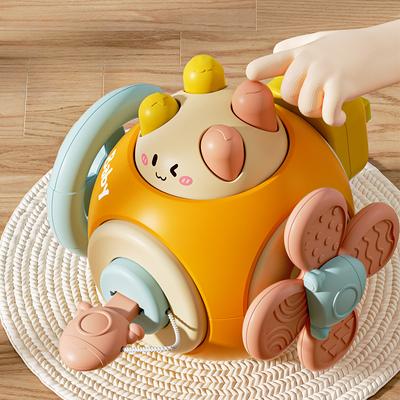
Tiny Tots Teens Trends Montessori Baby Training, Infant Puzzle Early Education Toys, Busy Hand Grasping Ball For Baby Montessori Baby Training, Infant Puzzle Early Education Toys, Busy Hand Grasping Ball For BabyIntroduce Your Baby to the World of Learning The Infant Puzzle Early Education Toys are designed to foster cognitive and physical development in your little one. This Multifunctional Busy Ball for Montessori Baby Training is ideal for enhancing...79,97 $*Shipping: 0,00 $Secure redirect to the provider
-
Does an implication apply to both sides?
Yes, an implication applies to both sides. In an implication statement "if A then B," A is the antecedent and B is the consequent. This means that if A is true, then B must also be true. However, if A is false, then the statement is still considered true, as there is no requirement for B to be true in that case. Therefore, an implication applies to both sides, but the truth value of the antecedent does not necessarily determine the truth value of the consequent. **
-
Can a permit also be granted by implication?
Yes, a permit can also be granted by implication. This means that even if a permit is not explicitly stated or written down, it can still be inferred or implied based on the actions or conduct of the parties involved. For example, if a property owner consistently allows a certain activity to take place on their property without objection, it can be implied that they have granted a permit for that activity. Implied permits are often based on the principle of estoppel, where a party is prevented from denying something due to their previous actions or representations. **
-
What is the difference between allusion and implication?
An allusion is a reference to a person, place, event, or literary work that the author expects the reader to recognize and understand. It is a direct or indirect reference to something outside of the text. On the other hand, an implication is a suggestion or hint that is not explicitly stated in the text but can be inferred by the reader. It is the conclusion or meaning that the reader draws from the text based on the information provided. In summary, an allusion is a direct reference, while an implication is a subtle suggestion or inference. **
-
What do I not understand about disjunction and implication?
It seems like you may not fully understand the difference between disjunction and implication in logic. Disjunction, represented by the symbol "∨", is a logical operation that represents "or" - it is true if at least one of the statements is true. Implication, represented by the symbol "→", is a logical operation that represents "if...then" - it is false only when the antecedent is true and the consequent is false. Understanding the nuances of how these logical operations work and how they are used in different contexts can help clarify any confusion you may have. **
* All prices are inclusive of VAT and, if applicable, plus shipping costs. The offer information is based on the details provided by the respective shop and is updated through automated processes. Real-time updates do not occur, so deviations can occur in individual cases. ** Note: Parts of this content were created by AI.